The Lasting Benefits of a Spanish Immersion Montessori Education
As parents, we all want to provide our children with opportunities that will help them thrive—not only in school, but throughout their lives. One of the most valuable gifts we can give young children is the opportunity to learn a second language during the years when their brains are naturally wired for language acquisition.
At International Montessori, our Spanish Immersion Montessori program combines two powerful educational approaches: authentic Spanish language immersion and the proven Montessori method. Together, they create a learning environment that supports cognitive development, cultural awareness, independence, and lifelong academic success.
Why Early Childhood Is the Ideal Time to Learn a Second Language
Research consistently shows that young children are uniquely equipped to absorb language. During the first six years of life, the brain experiences a period of rapid growth and development often referred to as the “sensitive period” for language acquisition.
Unlike older children and adults who often learn a language through memorization and translation, young children naturally acquire language through meaningful experiences, conversation, songs, stories, and daily interactions.
In a Spanish immersion environment, children hear and use Spanish throughout the day, allowing them to develop language skills in the same natural way they learned their first language.
Cognitive Benefits of Spanish Immersion
Learning a second language offers far more than communication skills. Studies have found that bilingual children often demonstrate enhanced cognitive abilities that benefit them across all areas of learning.
Improved Executive Function
Children who regularly use two languages develop stronger executive functioning skills, including:
- Focus and attention control
- Problem-solving abilities
- Mental flexibility
- Working memory
- Self-regulation
Because bilingual children continuously switch between languages, their brains become skilled at filtering information, adapting to new situations, and managing multiple tasks.
Enhanced Critical Thinking Skills
Learning two languages encourages children to think more deeply about communication, meaning, and perspective. This often leads to stronger analytical thinking and creativity.
Stronger Academic Performance
Research suggests that bilingual students frequently perform well in areas such as reading comprehension, mathematics, and standardized testing. The cognitive skills developed through bilingualism often transfer to other academic subjects.
Long-Term Benefits of Bilingualism
The advantages of learning Spanish extend well beyond childhood.
Greater Career Opportunities
Spanish is one of the most widely spoken languages in the world and the second most spoken language in the United States. Bilingual individuals often have access to expanded career opportunities in fields such as:
- Healthcare
- Education
- Business
- Technology
- Government
- International relations
Employers increasingly value employees who can communicate with diverse populations and operate in multicultural environments.
Cultural Awareness and Global Citizenship
Language and culture are deeply connected. Through Spanish immersion, children gain appreciation for diverse perspectives, traditions, and ways of life.
This cultural understanding helps children develop empathy, confidence, and respect for others—qualities that are increasingly important in today’s interconnected world.
Lifelong Cognitive Health
Research has also suggested that bilingualism may contribute to cognitive resilience later in life. The mental exercise involved in using multiple languages appears to strengthen neural pathways and support long-term brain health.
Why Montessori and Spanish Immersion Are the Perfect Match
The Montessori method naturally supports language acquisition because it is built around hands-on learning, meaningful experiences, and individualized instruction.
Language Through Real-Life Experiences
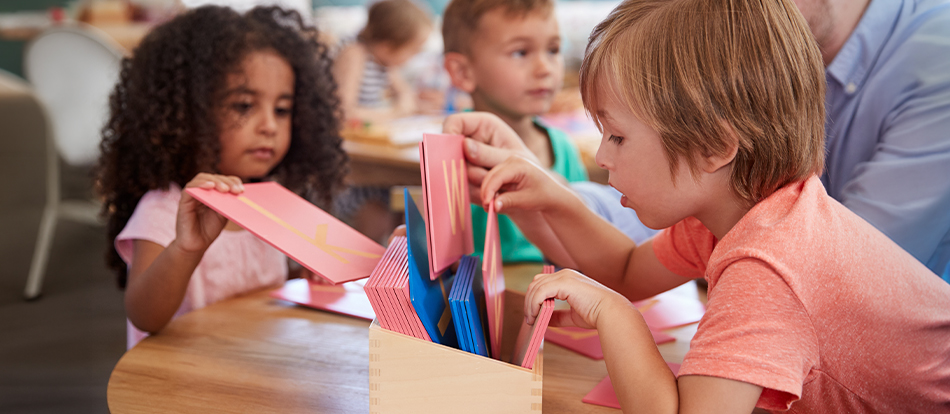
Rather than memorizing vocabulary lists, children in a Montessori classroom learn language through purposeful activities. They hear and use Spanish while preparing snacks, caring for plants, working with Montessori materials, participating in group lessons, and interacting with teachers and classmates.
This context-rich learning helps children develop authentic language skills and deeper understanding.
Respect for Each Child’s Development
Montessori education recognizes that every child learns at their own pace. Children are free to revisit activities, explore concepts deeply, and build confidence as they develop language skills naturally.
This individualized approach reduces pressure and encourages a positive relationship with learning.
Hands-On Learning Supports Language Growth
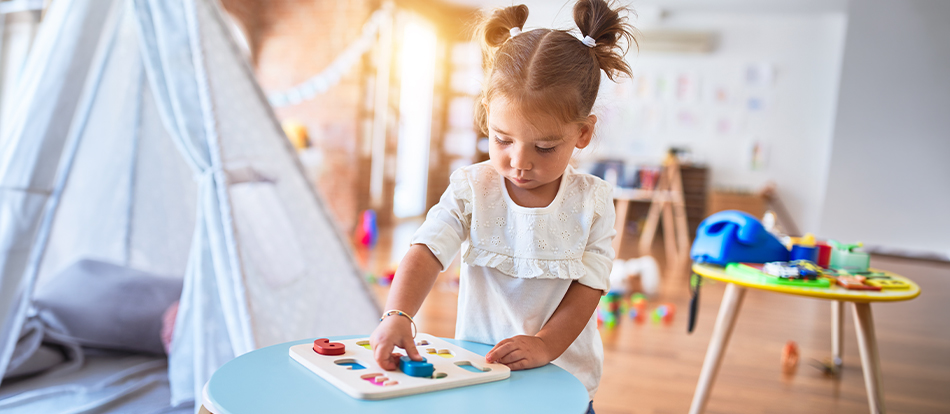
Montessori materials engage multiple senses, helping children connect language with concrete experiences. When children can see, touch, and manipulate materials while hearing Spanish vocabulary, learning becomes more meaningful and memorable.
Building Independence and Confidence
One of the hallmarks of Montessori education is fostering independence. As children gain confidence in their ability to communicate in two languages, they also develop self-esteem, resilience, and a willingness to take on new challenges.
What Makes a True Spanish Immersion Environment?
A true Spanish immersion program goes beyond occasional vocabulary lessons.
In an authentic immersion setting, Spanish is woven throughout the school day. Children hear Spanish during lessons, conversations, songs, stories, practical life activities, and daily routines.
This consistent exposure allows children to develop listening, comprehension, speaking, and eventually reading and writing skills in Spanish in a natural and engaging way.
The International Montessori Difference
At International Montessori, our Spanish Immersion Montessori program is designed to nurture the whole child. We combine the benefits of bilingual education with the child-centered Montessori philosophy to create an environment where children can develop academically, socially, emotionally, and linguistically.
Our classrooms provide:
- Opportunities for independence and leadership
- Authentic Spanish language immersion
- Montessori-certified educators
- Hands-on learning experiences
- Mixed-age classrooms that encourage collaboration
- Individualized instruction
- A culturally rich environment
Giving Your Child a Gift for Life
The ability to communicate in more than one language is a lifelong asset. When paired with the Montessori approach, Spanish immersion becomes more than language learning—it becomes a foundation for intellectual growth, cultural understanding, confidence, and future success.
By choosing a Spanish Immersion Montessori education, you are giving your child an opportunity to develop skills that will benefit them for years to come, while fostering a love of learning that can last a lifetime.
If you’d like to learn more about our Spanish Immersion Montessori program, we invite you to schedule a tour and experience firsthand how children thrive in our bilingual learning community.