How everyday interactions support toddler language development and lay the foundation for lifelong learning.
The second year of life is an exciting period of growth and discovery. Between 12 and 24 months, toddlers begin to understand more of the world around them, communicate their wants and needs, and develop the language skills that will support their future learning.
At International Montessori, we recognize that language development begins long before a child speaks in complete sentences. Through meaningful conversations, engaging books, familiar songs, and a thoughtfully prepared Montessori environment, we help young children build confidence in their ability to communicate.
For parents looking to encourage toddler language development at home, the good news is that some of the most effective learning opportunities happen naturally throughout the day.
Why Language Development Matters During the Second Year
Between their first and second birthdays, children experience tremendous growth in both receptive language (what they understand) and expressive language (what they can communicate).
During this stage, many toddlers begin to:
- Recognize familiar words, names, and everyday objects.
- Follow simple instructions and respond to questions.
- Use gestures, sounds, and words to express their needs.
- Identify pictures and objects in their environment.
- Combine words into simple phrases as they approach age two.
- Show increasing interest in communicating with adults and other children.
Every child develops at their own pace, but consistent exposure to rich, meaningful language helps create a strong foundation for communication, social development, and early literacy.
The Montessori approach supports this natural progression by surrounding children with opportunities to listen, observe, explore, and communicate in purposeful ways.
1. Reading Together: Building Vocabulary One Book at a Time
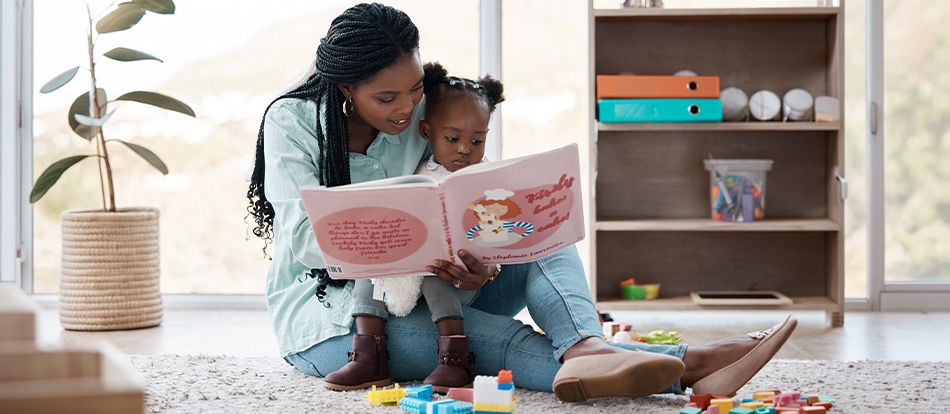
Reading aloud is one of the simplest and most valuable activities parents can share with their toddlers.
Books introduce children to new vocabulary, strengthen listening skills, and help them connect spoken words with familiar objects, people, and experiences.
At this age, reading doesn’t have to mean finishing every page of a story. Toddlers learn through repetition, interaction, and exploration.
Montessori-Inspired Reading Tips for Toddlers
Choose books with realistic images. Montessori education emphasizes connecting children to the real world. Books featuring photographs or realistic illustrations of animals, foods, vehicles, and everyday activities help toddlers associate language with their surroundings.
Encourage participation. Ask simple questions such as, “Where is the dog?” or “What do you see?” Give your child time to point, gesture, or respond.
Repeat favorite books. While reading the same story repeatedly may feel monotonous to adults, repetition helps toddlers recognize words, anticipate familiar phrases, and strengthen comprehension.
Follow your child’s interests. If your toddler is fascinated by trucks, animals, or flowers, choose books that encourage exploration of those topics.
Make reading part of your daily routine. A few minutes of reading before a nap, after breakfast, or at bedtime can create meaningful opportunities for language development.
In a Montessori classroom, books are displayed where children can independently access them, encouraging a natural love of reading from an early age.
2. Songs and Rhymes: Learning Language Through Rhythm
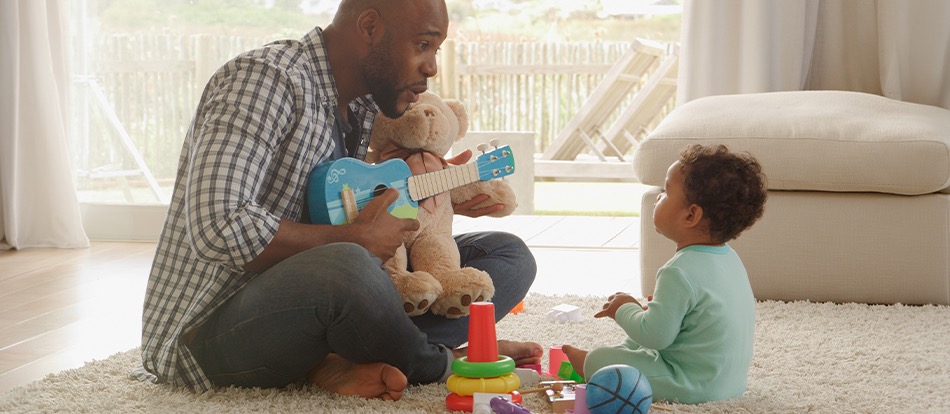
Music is another powerful tool for supporting language development in toddlers.
Songs introduce repetition, rhythm, and predictable language patterns that help young children recognize and remember words.
Simple nursery rhymes, fingerplays, and familiar melodies also encourage toddlers to participate through movement, gestures, and eventually spoken words.
How Music Supports Early Language Skills
Singing with your toddler can help develop:
- Vocabulary: Songs introduce words associated with animals, body parts, numbers, colors, and daily activities.
- Listening skills: Repeated melodies and familiar phrases encourage attention and recognition.
- Speech awareness: Rhythm and rhyme help children notice the sounds and patterns of language.
- Memory: Predictable songs allow toddlers to anticipate what comes next.
- Social connection: Singing together creates opportunities for eye contact, shared attention, and joyful interaction.
Easy Songs to Enjoy With Your Toddler
Familiar favorites such as The Wheels on the Bus, Twinkle, Twinkle, Little Star, Head, Shoulders, Knees, and Toes, and Old MacDonald Had a Farm offer wonderful opportunities for language and movement.
Parents can also create simple songs around everyday routines, such as washing hands, getting dressed, or putting toys away.
In Montessori environments, music and movement are incorporated naturally into the day, helping children develop language while engaging their senses and bodies.

3. Everyday Conversations: The Foundation of Communication
One of the most important ways to encourage language development is also one of the easiest: talk with your child.
Toddlers learn language through meaningful, responsive interactions with the people around them.
Rather than focusing exclusively on teaching new words, parents can support language development by describing everyday experiences, responding to their child’s attempts to communicate, and allowing conversations to unfold naturally.
Simple Ways to Encourage Toddler Conversation
Narrate everyday activities. While preparing breakfast, you might say, “I’m cutting the banana. The banana is yellow. Would you like a piece?”
Expand on your child’s words. If your toddler says “car,” you might respond, “Yes, that’s a red car! The car is driving down the street.”
Offer simple choices. Asking, “Would you like the blue cup or the green cup?” encourages children to listen, understand, and communicate their preferences.
Pause and allow time to respond. Young children often need additional time to process language and formulate a response. Giving them a few quiet moments encourages independent communication.
Get down to your child’s level. Eye contact, facial expressions, and attentive listening communicate that your child’s words and ideas are important.
These everyday exchanges help toddlers understand that language is a meaningful way to connect with others.
4. How the Montessori Method Encourages Language Development
In Montessori education, language is woven into nearly every aspect of the learning environment.
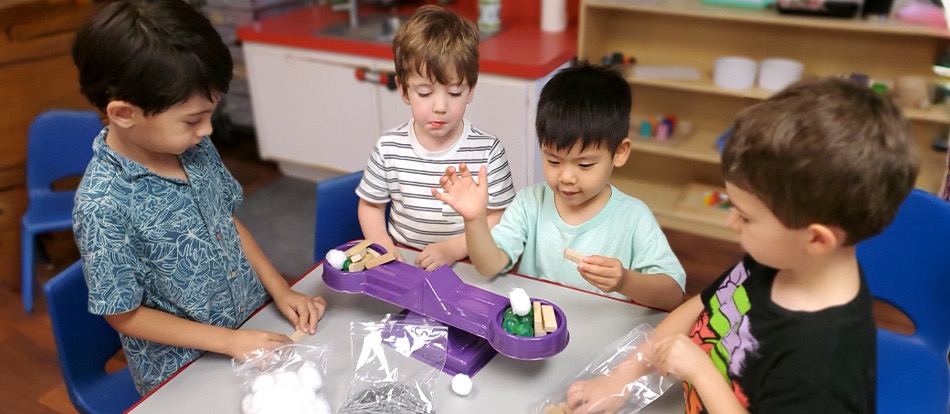
Rather than relying primarily on formal instruction, Montessori educators create opportunities for children to develop language through hands-on exploration, purposeful activities, and respectful interactions.
A Prepared Environment Rich in Language
Montessori classrooms are carefully organized with materials that encourage children to explore their surroundings and develop independence.
Educators introduce precise vocabulary by naming objects, describing actions, and connecting language to real experiences.
For example, a toddler exploring a basket of familiar objects may hear words such as “spoon,” “brush,” “smooth,” or “soft” as the teacher helps them identify and understand each item.
Language Through Practical Life Activities
Practical life activities are an essential part of the Montessori experience.
Tasks such as pouring water, washing hands, preparing snacks, and caring for the classroom provide natural opportunities for language development.
As children participate, educators introduce vocabulary associated with actions, objects, and sequences.
A simple activity like washing hands becomes an opportunity to learn words such as “water,” “soap,” “rub,” “rinse,” and “dry.”
Respectful Communication and Independence
Montessori educators model clear, respectful language and encourage children to express their needs.
Instead of anticipating every request, teachers allow children opportunities to communicate through words, gestures, and expressions.
This approach supports language development while helping toddlers build confidence, independence, and social awareness.

5. Supporting Language Development in a Montessori Home
Parents don’t need specialized materials or elaborate activities to create a language-rich home environment.
The most meaningful opportunities often arise during ordinary moments together.
Here are a few simple Montessori-inspired ideas:
- During mealtime: Name foods, describe textures, and invite your child to make choices.
- While getting dressed: Identify clothing items, body parts, and colors.
- On neighborhood walks: Point out trees, birds, flowers, and passing vehicles.
- During playtime: Describe what your child is doing and introduce new vocabulary naturally.
- At bedtime: Read a favorite book, sing a familiar song, and talk about the day’s experiences.
Remember that language learning is not about constantly questioning or correcting your child. It is about creating a warm, responsive environment where communication feels natural and enjoyable.

6. Every Child’s Language Journey Is Unique
Some toddlers begin speaking early, while others spend more time listening, observing, and communicating through gestures before their vocabulary expands.
Children growing up in bilingual or multilingual households may also develop language skills across multiple languages. Exposure to more than one language does not, by itself, cause a language disorder.
What matters most is providing consistent opportunities for meaningful interaction, responding to communication attempts, and celebrating progress.
If you have concerns about your child’s speech or language development, your pediatrician or a licensed speech-language pathologist can help determine whether additional support may be beneficial. Early evaluation can be valuable, and families do not need to wait for a child to fall significantly behind before asking questions.
Growing Confident Communicators at International Montessori
At International Montessori in Austin, Texas, we believe that the foundation for lifelong learning begins with meaningful relationships, purposeful exploration, and a nurturing environment that respects each child’s individual development.
Our Montessori toddler programs support children as they build independence, expand their vocabulary, develop social connections, and discover the joy of communicating with others.
Through books, music, practical life activities, and everyday conversations, our educators help create a language-rich environment where children feel heard, valued, and encouraged to grow.
Interested in learning more about our Montessori toddler programs in Austin?
We invite you to explore International Montessori and discover how our thoughtfully prepared classrooms support early childhood development.
Schedule a tour today to learn more about our Montessori philosophy, meet our educators, and see how we nurture confident, curious, and capable young learners.