
When parents picture a Montessori classroom, they may imagine beautiful wooden materials, children working independently, and a calm, carefully prepared environment. But there is another important part of the Montessori experience that can sometimes be misunderstood: play.
In recent years, play-based learning has received renewed attention in early childhood education. Research published in 2026 continues to explore how play can support children’s learning and development, while educators are increasingly looking at how intentional instruction and meaningful play can complement one another rather than compete.
So, where does play fit into Montessori?
The answer begins with one of the most recognizable ideas associated with Maria Montessori: play is the work of the child.
But what does that actually mean?
What Does “Play Is the Work of the Child” Mean?
The phrase is often used to describe Montessori education, although the exact wording is better understood as a summary of Montessori’s broader philosophy than as a direct quotation from one of her published works. Montessori observed that young children are naturally driven to explore, repeat, practice, and master activities in their environment.
For a young child, an activity that looks like simple play to an adult may actually involve an enormous amount of learning.
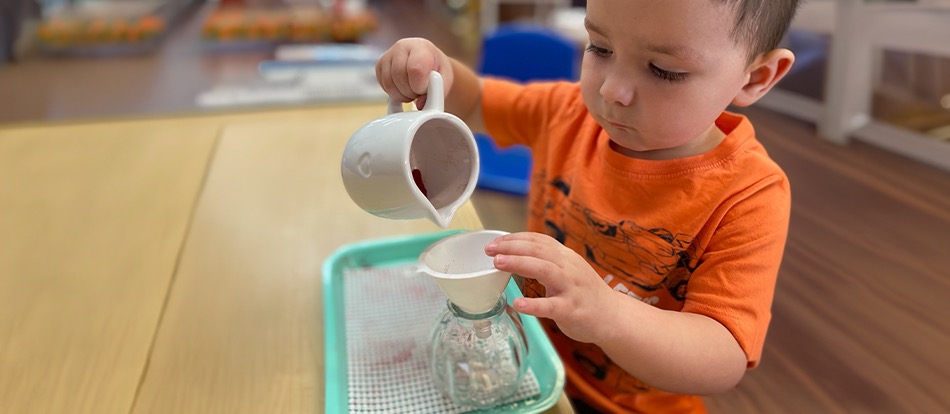
A child pouring water is developing coordination.
A child building with blocks is exploring balance, dimensions, and spatial relationships.
A child carefully washing a table is practicing sequencing, concentration, and independence.
A child repeating a puzzle is developing problem-solving skills and persistence.
In Montessori, these activities are often referred to as work because they serve a meaningful developmental purpose.
The important distinction is that “work” does not mean adult-style labor. It means purposeful activity through which the child is actively constructing their understanding of the world.
Montessori and Play-Based Learning: Are They the Same?
This is where Montessori can sometimes be misunderstood.
Some people assume Montessori is the opposite of play-based learning because Montessori classrooms often use the word work rather than play.
In reality, the relationship is more nuanced.
The Montessori approach emphasizes purposeful, hands-on activity, choice within limits, concentration, repetition, and learning through real experiences. The American Montessori Society has also explored the relationship between work and play, noting that children’s development can benefit from both purposeful Montessori work and different forms of play.
Contemporary research on play-based learning similarly increasingly recognizes that play and intentional teaching do not necessarily have to be opposing approaches. A 2026 analysis of early literacy, for example, describes play-based learning and explicit instruction as potentially complementary when thoughtfully integrated.
This is an important distinction for parents:
Montessori does not mean “no play.” It means taking children’s activity seriously.
Why Hands-On Activity Is So Important in Montessori
Young children learn through their bodies and senses.
Before a child can understand an abstract concept, they often need an opportunity to experience it physically.
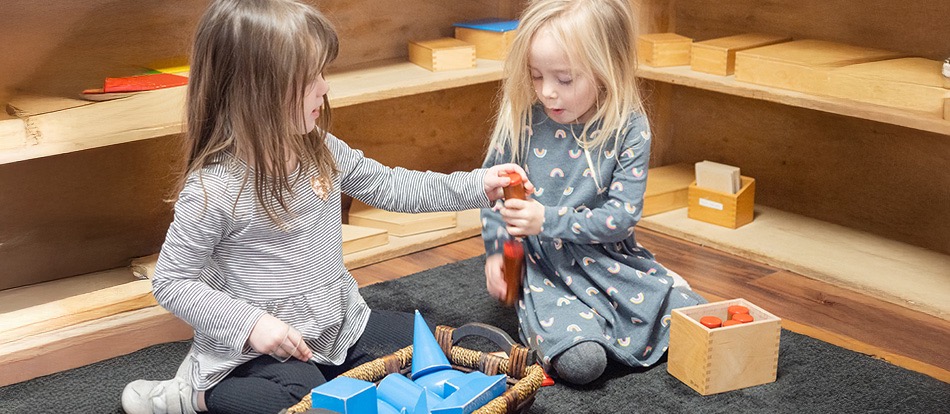
This is why Montessori classrooms are filled with hands-on materials and real-life activities.
A child doesn’t simply hear that objects can be different sizes—they can physically compare them.
They don’t just memorize that ten comes after nine—they manipulate quantities.
They don’t only learn about practical life—they practice pouring, sweeping, washing, preparing food, buttoning, dressing, and caring for their environment.
These experiences transform learning from something a child is told into something a child discovers.
The Importance of Repetition
Have you ever noticed your child doing the same thing over and over again?
Pouring water.
Opening and closing a container.
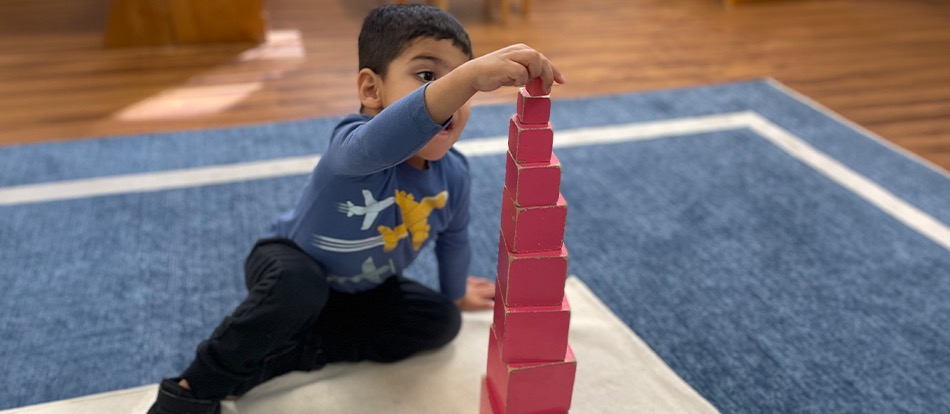
Building the same tower.
Completing the same puzzle.
Washing the same object.
Adults may wonder, “Why are they doing that again?”
In Montessori, repetition is an important part of learning.
Children repeat activities because they are refining their movements, testing their understanding, developing concentration, and working toward mastery.
What looks repetitive from the outside can be deeply engaging from the child’s perspective.
This is one reason Montessori classrooms provide uninterrupted periods of time for children to work. Rather than constantly moving children from one activity to another, Montessori environments allow children time to become absorbed in meaningful work.
What Does Play Look Like in a Montessori Classroom?
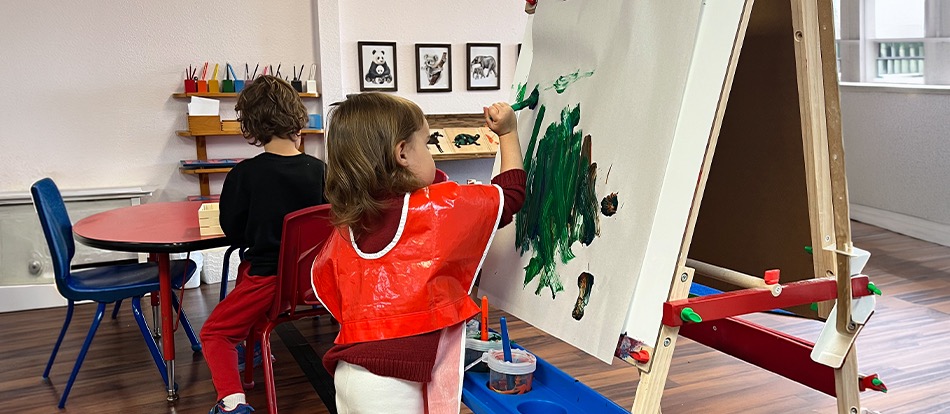
Walk into a Montessori classroom and you may not see children playing in exactly the same way you would in a traditional preschool setting.
Instead, you may see children:
- Building with carefully designed materials
- Completing puzzles
- Sorting and classifying objects
- Practicing practical life skills
- Preparing food
- Exploring sensory materials
- Creating artwork
- Working with numbers and quantities
- Matching objects and pictures
- Practicing sounds and letters
- Gardening
- Caring for plants and animals
- Collaborating with classmates
- Exploring materials independently
To an adult, some of these activities may look like play.
To the Montessori educator, they are opportunities for the child to work, explore, practice, and grow.
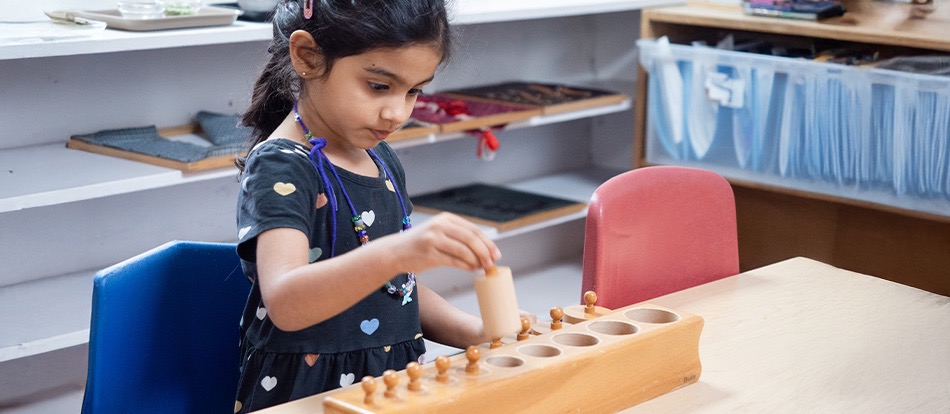
Play Builds Concentration
One of the most valuable things children develop through meaningful activity is the ability to concentrate.
Consider a three-year-old who spends 15 minutes carefully transferring objects from one container to another.
They are not simply moving objects.
They are practicing:
- Hand-eye coordination
- Fine-motor control
- Focus
- Sequencing
- Patience
- Independence
- Problem-solving
The child is learning how to direct their attention toward a goal and persist until they are satisfied with the result.
That capacity for concentration becomes important far beyond preschool.
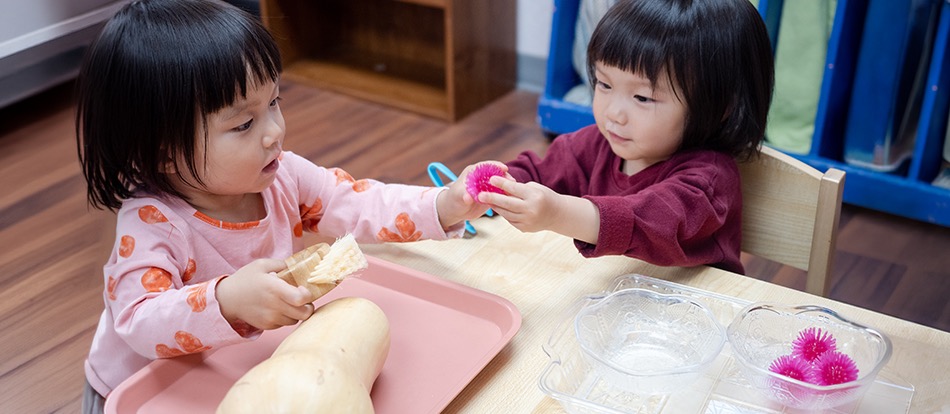
Play Supports Social and Emotional Development
Play also gives children opportunities to navigate relationships.
When children work or play alongside one another, they practice:
- Taking turns
- Communicating
- Solving disagreements
- Observing others
- Cooperating
- Expressing emotions
- Setting boundaries
- Understanding different perspectives
Contemporary early childhood research continues to examine the role of play in social and emotional development, including its potential value for children’s self-regulation and well-being.
A Montessori classroom provides opportunities for these skills to develop naturally within a community of children.
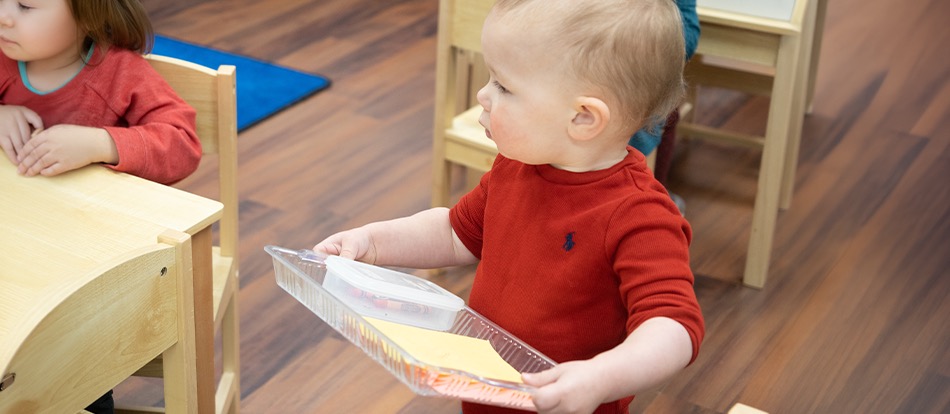
Practical Life: When “Play” Looks Like Real Life
One of the most distinctive aspects of Montessori education is the emphasis on Practical Life activities.
To an adult, washing a table may seem like a chore.
To a young child, it can be fascinating.
The child gets to:
- Gather the materials.
- Carry them to the work area.
- Pour water.
- Wet the cloth.
- Scrub the surface.
- Wipe it clean.
- Empty the water.
- Return the materials.
This seemingly simple activity requires coordination, sequencing, concentration, and independence.
And perhaps most importantly, the child gets to experience the satisfaction of doing something meaningful for themselves and their community.
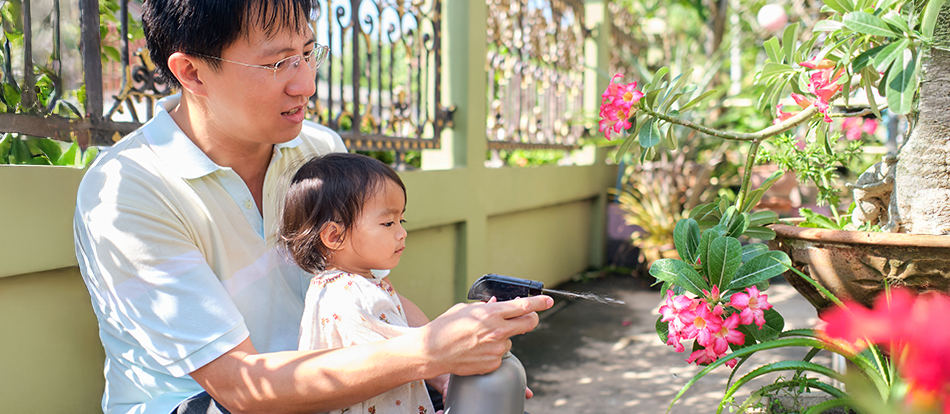
How Parents Can Encourage Montessori-Style Play at Home
You don’t need to recreate a Montessori classroom in your home to embrace the philosophy.
Start by giving your child opportunities to do real things.
Invite them to:
- Help prepare a snack
- Pour their own water
- Fold small towels
- Put away toys
- Water plants
- Help set the table
- Wash fruits and vegetables
- Sort laundry
- Sweep the floor
- Organize books
- Help care for a pet
You can also provide simple opportunities for open-ended exploration with blocks, art materials, puzzles, books, and objects from nature.
The key is not having the “perfect” Montessori toy.
The key is creating an environment where your child can participate, explore, make choices, and practice independence.
Let Children Be Bored Sometimes
Another important part of supporting play is resisting the urge to constantly entertain children.
Children don’t need every moment of their day filled with structured activities.
When children have time and space to explore, they may invent games, investigate objects, build elaborate structures, draw, tell stories, or simply observe what is happening around them.
Boredom can create room for curiosity.
Rather than immediately handing your child a screen or suggesting the next activity, try saying:
“I wonder what you could find to do.”
Then give them time.
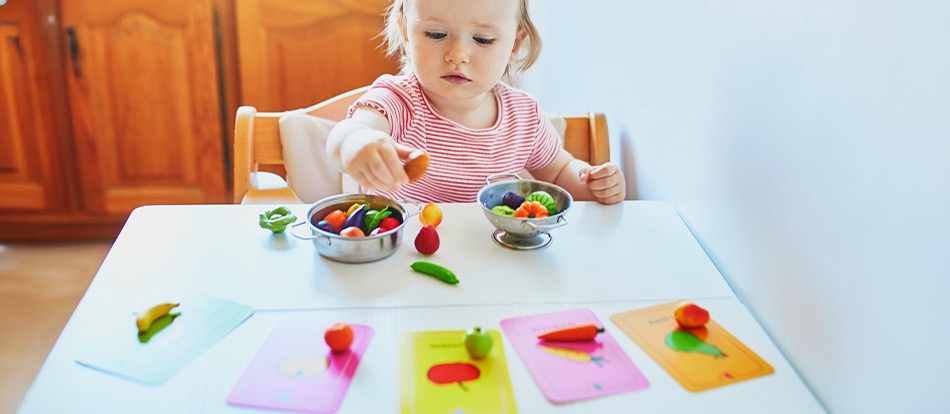
The Montessori Goal Isn’t to Make Childhood More Academic
Perhaps one of the biggest misconceptions about early childhood education is that children need to be pushed toward academic achievement as early as possible.
Montessori takes a longer view.
The goal isn’t simply to make a four-year-old better at reading or mathematics.
The goal is to help children become capable, curious, independent learners.
When children develop concentration, coordination, persistence, language, independence, problem-solving skills, and confidence, they are building the foundation for future academic success.
And they are doing it through experiences that are meaningful to them.
Why Play Still Matters in 2026
The renewed interest in play-based learning in 2026 reflects an important shift in how educators think about early childhood.
Rather than asking whether children should be playing or learning, educators increasingly recognize that meaningful play can be a context for learning.
A 2026 scoping review describes play-based learning as a widely studied approach in early childhood education, while recent scholarship emphasizes finding productive ways to combine children’s engagement and agency with intentional teaching.
This aligns with an important Montessori principle: children learn best when they are actively engaged in their environment.
The question isn’t simply, “Is the child playing?”
A better question is:
“What is the child learning while they are engaged?”
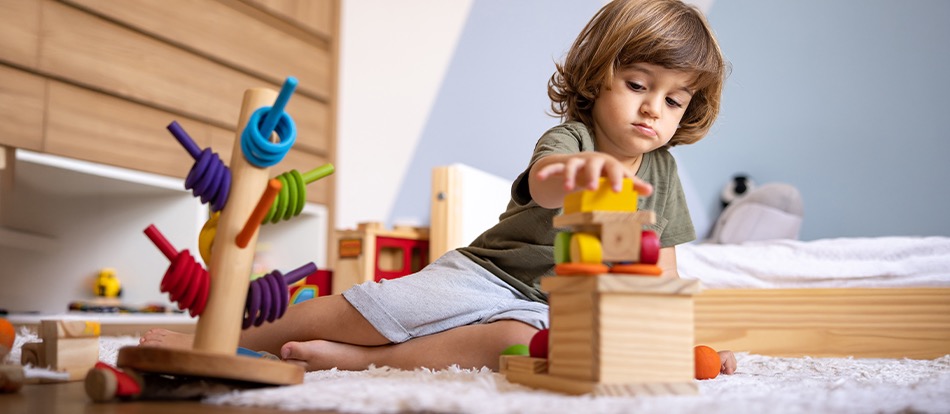
At International Montessori, Children Learn Through Doing
At International Montessori, we believe children deserve an environment that respects their natural curiosity and their desire to become capable and independent.
Our classrooms are intentionally prepared to give children opportunities to explore, practice, repeat, discover, and master new skills.
Sometimes that learning looks like a traditional Montessori work.
Sometimes it looks like a child carefully pouring water, building something, preparing food, caring for a classroom plant, creating art, or collaborating with a friend.
To an adult, it may look like play.
To the child, it is something much more important:
It is how they learn about themselves and their world.
Looking for a Montessori Preschool in Austin?
If you’re searching for a Montessori preschool in Austin that values hands-on learning, independence, purposeful activity, and the whole child, we invite you to learn more about International Montessori.
Come visit one of our campuses and see a Montessori classroom in action. You may be surprised by how much learning is happening when children are simply given the time, environment, and freedom to do what they do best: explore, practice, and grow.
Schedule a tour with International Montessori and discover what meaningful learning looks like for your child.